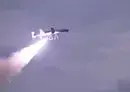
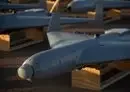
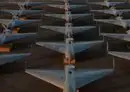
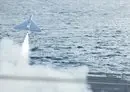
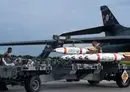
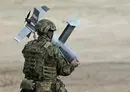
![Demonstrating rapid innovation, the Indiana National Guard hosted the T-REX experimentation framework, advancing the Low-Cost Uncrewed Combat Attack System (LUCAS) from public demonstration to operational employment in just seven months. [Indiana National Guard]](/ssc_fa/images/2026/05/26/56222-lucas-600_384.webp)
The US Navy has transformed maritime operations in the Middle East with a new autonomous weapon.
The Low-Cost Uncrewed Combat Attack System, or LUCAS, is redefining how forces maintain a just blockade in the Strait of Hormuz.
Made to combat one-way attack drones, this American innovation offers a highly effective and affordable solution for regional security.
The drone provides a vital technological edge against asymmetric maritime threats in the Gulf.
By integrating seamlessly with surface ships and stealthy submarines, LUCAS enhances deterrence in critical global chokepoints.
Shielding the surface fleet
The US military relies on drone swarms to form an outer defensive screen for its naval vessels.
These uncrewed systems act as vigilant sentries that patrol the tense waters of the region.
They investigate suspicious contacts and neutralize asymmetric threats before they reach Arleigh Burke-class destroyers or Littoral Combat Ships.
This proactive defense stops explosive fast-attack boats long before they pose a severe danger to the fleet.
By deploying LUCAS drones, naval commanders significantly reduce the operational risk to human sailors at sea.
This protective layer ensures that the surface fleet can operate safely while enforcing a secure maritime environment.
An "aerial periscope" for subsurface assets
Submarines face extreme vulnerability when they must rise to periscope depth or emit active sonar.
The LUCAS drone eliminates this operational risk entirely by functioning as an advanced aerial periscope.
It loiters safely above a designated target and monitors the surrounding regional maritime environment continuously.
The aircraft silently beams real-time tracking coordinates directly down to the deeply submerged attack submarine.
It transmits this vital targeting data using advanced acoustic modems or specialized trailing wire antennas.
Armed with continuous and precise targeting information, a modern attack submarine achieves remarkable over-the-horizon lethality.
The submarine can launch a heavyweight torpedo or an anti-ship missile from deep, safe waters.
This decisive capability allows the submarine to strike targets without ever revealing its hidden presence.
The integration of the LUCAS drone represents a major shift in modern naval warfare strategies.
US forces can now project power more effectively while maintaining a necessary blockade in the Strait of Hormuz.
This modern strategy counters the aggressive asymmetric tactics frequently employed by the Islamic Republic regime.
The affordable nature of these drones allows the military to mass-produce and deploy them rapidly.
Uncrewed systems will continue to play a pivotal role in the vital Middle Eastern waterways.