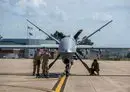
![LUCAS drones are positioned on the tarmac at a base in the US Central Command (CENTCOM) operating area, on November 23. [US Central Command]](/ssc_fa/images/2026/04/02/55262-lucas-600_384.webp)
Modern naval warfare is increasingly defined by surveillance dominance rather than traditional fleet strength or visible firepower.
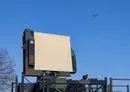
The United States has developed integrated ISR "kill webs" that combine sensors, drones, submarines, and missile defenses into a single operational architecture.
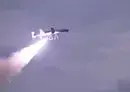
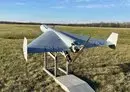
Within this system, ISR-enabled LUCAS drones function as persistent sensors, constantly feeding real-time targeting data into a shared network.
This continuous flow of information allows commanders to select the most efficient interceptor for each specific threat rather than relying on the first responding platform.
As a result, surface ships operating in contested waters face a battlefield where evasion becomes nearly impossible due to constant tracking.
Persistent surveillance
ISR networks also multiply the effectiveness of defensive systems by enabling coordinated "saturation defense" against large numbers of incoming threats.
Swarms of interceptor drones can scan wide areas simultaneously while onboard artificial intelligence filters noise and guides them through electronic jamming.
This allows interceptors such as THAAD or Patriot systems to locate and destroy targets even in heavily contested environments.
Continuous surveillance further creates operational feedback loops that refine tactics in real time based on observed enemy behavior.
By studying how Iranian drones maneuver or react to defensive measures, the system rapidly improves both hardware performance and defensive software.
The result is a defensive architecture that continuously evolves while remaining difficult for adversaries to counter effectively.
Surface vessels become increasingly vulnerable because their movements are tracked persistently across the entire theater of operations.
Even attempts to operate under electronic warfare conditions cannot fully disrupt a network that relies on multiple overlapping sensors.
This leaves surface fleets exposed to rapid targeting once they enter contested waters.
Submarines as stealth nodes
ISR-enabled LUCAS drones do not operate independently but instead serve as essential nodes that "tip and queue" stealth strike platforms.
US fast-attack submarines use this targeting information to launch precision Tomahawk strikes against hardened command nodes and air-defense systems from long distances.
In this architecture, submarines function as undetectable hubs that combine real-time intelligence with offensive firepower while remaining hidden beneath the surface.
This capability was demonstrated when a coordinated strike reportedly sank the Islamic Republic's IRIS DENA off the coast of Sri Lanka on March 4.
By pairing persistent surveillance with precision targeting, the operation showed how submarines can neutralize surface ships without exposing themselves to retaliation.
Submarines also contribute to theater-wide air defense by identifying launch sites and transmitting early warning data to land-based defensive systems.