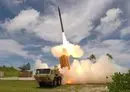
![US launch a Stryker Maneuver Short-Range Air Defense (M-SHORAD) at an enemy target during Rotation 26-01 at the National Training Center, Fort Irwin, California, October 17, 2025. [US Army]](/ssc_fa/images/2026/07/15/56992-_180__m-shorad-600_384.webp)
Modern military formations depend on constant mobility, making reliable protection from low-altitude aerial threats an increasingly essential battlefield requirement.
Modern military planners recognized that maneuvering ground forces required dedicated air defenses capable of matching their speed, flexibility and operational tempo.
After reducing many short-range air defense units during the early 2000s, the Army reassessed emerging airborne threats and identified a critical capability gap.
Why M-SHORAD was developed
That assessment led to the development of the Maneuver Short-Range Air Defense (M-SHORAD) system restoring mobile protection for frontline formations.
Rather than relying upon fixed defensive positions, the system accompanies maneuver units while providing continuous protection throughout rapidly changing operational environments.
This mobile approach allows commanders to defend advancing forces without sacrificing speed, flexibility or tactical momentum during demanding missions.
The requirement also reflected growing concern that traditional air defense assets alone could not adequately protect dispersed ground formations.
In June 2024, the Army officially designated the system as the SGT STOUT, honoring Medal of Honor recipient Sgt. Mitchell W. Stout.
Stout became the only Air Defense Artillery Soldier awarded the Medal of Honor after sacrificing himself to protect fellow soldiers during the Vietnam War.
Army leaders selected his name because the system embodies the same commitment to protecting others from airborne danger.
Layered protection on the move
M-SHORAD combines multiple defensive capabilities within a single mobile platform, allowing crews to engage several categories of aerial and ground threats.
Its integrated sensor suite continuously detects, tracks and identifies targets while supporting rapid engagement decisions under demanding operational conditions.
The system employs guided missiles, an automatic cannon and a machine gun, creating layered defensive options against different target types.
This combination enables operators to select the most appropriate response according to range, altitude, speed and overall tactical circumstances.
Integrated radar and electro-optical sensors improve situational awareness by providing accurate target information during day, night and limited-visibility conditions.
The system can defeat or neutralize unmanned aircraft systems, rotary-wing aircraft, fixed-wing aircraft, rockets, artillery and mortar threats.
Mobile protection allows combat formations to maintain momentum while reducing vulnerability during movement across complex terrain and changing operational environments.
The design also supports rapid integration with broader air and missile defense networks, improving coordination across multiple defensive systems.
Future modernization efforts continue exploring additional capabilities while preserving the platform's core mission of protecting maneuver forces against evolving aerial threats.
By restoring an essential battlefield capability, M-SHORAD strengthens layered air defense while ensuring mobile forces remain protected throughout increasingly dynamic operations.