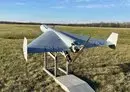
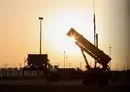
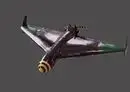
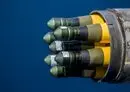
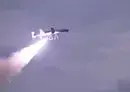
![A Polish Army soldier carries an AS3 Surveyor interceptor drone, part of the US counter-drone system known as 'MEROPS,' during a live-fire demonstration at the Deba training grounds in Subcarpathian Voivodeship, Poland, on November 18, 2025. [Artur Widak/AFP]](/ssc_fa/images/2026/05/12/55964-afp-600_384.webp)
For several years, the Islamic Republic regime relied heavily on a highly disruptive military strategy.
They mass produced cheap drones to constantly harass commercial vessels traveling through the Strait of Hormuz.
Their military leadership firmly believed they could slowly drain the financial resources of the US Navy.
Today, a brand new technological deployment fundamentally upends this carefully planned regional balance of power.
The newly deployed Merops advanced artificial (AI) system neutralizes these hostile Iranian drone threats both efficiently and affordably.
The Merops platform utilizes advanced AI to protect critical Middle Eastern maritime chokepoints autonomously.
This intelligent system identifies and eliminates incoming aerial threats without ever relying on expensive traditional munitions.
Recent strategic reports from the Institute for the Study of War confirm that military AI integration drastically reduces interception costs.
Consequently, the IRGC can no longer "win by spending less" on their offensive weapon systems.
The Merops platform actively hunts and targets these unmanned aerial vehicles with unprecedented speed and precision.
What once looked like a potential trap for the US Navy now functions completely differently today.
The strategic deployment of Merops effectively turns the Strait of Hormuz into a literal shooting gallery.
The US and its regional partners can now easily neutralize incoming Iranian drones very cheaply.
The Islamic Republic will constantly find its inexpensive weapons destroyed long before they reach their intended targets.
This vital technological shift guarantees a much safer environment for international shipping and overall regional stability.
Middle Eastern nations recognize that modern AI permanently nullifies traditional asymmetric advanced warfare tactics.