![Airmen transport MK-62 Quickstrike mines across a secure flight line for loading onto a B-1B Lancer during an exercise. [US Air Force]](/ssc_fa/images/2026/05/11/55966-_126__mk-62_quickstrike-600_384.webp)
For decades, observers viewed the US Navy primarily through a defensive lens focused on mine countermeasures rather than proactive offensive capabilities.
That operational reality has shifted toward an aggressive sea denial strategy that uses advanced mining to seize the tactical initiative.
The US military possesses the capability to target naval threats directly at the source by hitting storage bunkers and pier-side minelayers.
The MK-62 Quickstrike allows for the rapid transformation of standard air corridors into impassable maritime barriers using 500-pound class bottom mines.
![Sailors conduct a pre-operational inspection on a Quickstrike naval mine on the flight deck of Nimitz-class aircraft carrier USS Abraham Lincoln (CVN-72), May 6, 2026. Abraham Lincoln is deployed to the US 5th Fleet area of operations to support maritime security and stability in the Middle East. [US Navy]](/ssc_fa/images/2026/05/11/56018-replacement-600_384.webp)
Unlike traditional moored mines, these sit on the seabed and use advanced sensors to detect magnetic, seismic and pressure signatures.
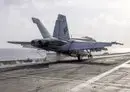
Deployed by B-52, B-1 and F/A-18 aircraft, these mines can be laid in massive quantities to collapse entire shipping networks.
Modern versions integrated with JDAM kits allow aircraft to seed harbors from high altitudes while staying safely out of coastal defense ranges.
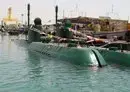
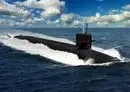
The MK-67 Submarine Launched Mobile Mine (SLMM) represents the ultimate clandestine threat to the freedom of movement within secure naval bases.
This modified torpedo travels under its own power after being launched to reach areas normally inaccessible to aircraft or surface ships.
Once the MK-67 reaches its programmed destination, it rests silently on the bottom until a specific acoustic or magnetic signature triggers it.
A submarine can seed harbor entrances covertly, meaning a fleet could be effectively bottled up before commanders realize a minefield exists.
Historically, the US successfully closed North Vietnamese ports during Operation Pocket Money, halting the flow of supplies and forcing a strategic settlement.
Current military strategy now favors integrated mining by using high-altitude bombers for volume and submarines for surgical and clandestine placement.
For littoral naval officers, the presence of attack submarines in the region is no longer just a torpedo threat but a mining risk.
The combination of aerial saturation and submarine precision means the first shot of an escalation may be a silent, immobilizing minefield.
This proactive approach alters the decision calculus for any adversary by ensuring their entire fleet remains trapped within its own base.