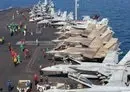
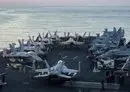
![An F/A-18E Super Hornet, attached to Strike Fighter Squadron (VFA-151), launches from the flight deck of Nimitz-class aircraft carrier USS Abraham Lincoln (CVN-72), June 29, 2026. Abraham Lincoln is deployed to the US 5th Fleet area of operations to support maritime security and stability in the Middle East. [US Navy]](/ssc_fa/images/2026/07/20/57119-377_pre-approved_2-600_384.webp)
In a decisive response to ongoing aggression and malign activities by the Iranian regime, United States Central Command (CENTCOM) forces have executed a series of highly coordinated precision strikes targeting the Iranian regime's military infrastructure.
These operations represent a significant and calculated effort by the US military to degrade Iran's capacity to threaten regional stability, disrupt global commerce and endanger civilian mariners operating in vital maritime corridors, including the Strait of Hormuz.
Operating under explicit directives, US forces have demonstrated both the resolve and the capability to hold the regime accountable for its hostile actions.
Targeting the IRGC's core capabilities
The recent strikes were meticulously planned to neutralize heavily fortified and strategically critical assets operated by Iran's Islamic Revolutionary Guard Corps (IRGC).
Public releases from CENTCOM detail a comprehensive target list designed to cripple the regime's offensive and defensive operations.
Among the primary objectives successfully engaged were major IRGC command and control centers.
By destroying these nerve centers, the US military has severely disrupted the IRGC's ability to coordinate hostile activities, direct proxy forces and manage complex attacks across the Middle East.
Beyond command nodes, the US precision strikes systematically dismantled key components of Iran's kinetic strike networks.
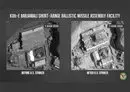
US munitions aggressively targeted missile capabilities and unmanned aerial vehicle (UAV) infrastructure.
The regime has heavily relied on these missile and drone programs to project asymmetric power, harass international shipping and conduct destabilizing operations.
Furthermore, the strikes degraded critical air defense sites and coastal surveillance facilities.
Neutralizing these sensory and defensive networks effectively blinds the regime's situational awareness, rendering its coastal waters vulnerable while ensuring the safety of US and allied forces.
Operational execution and strategic intent
The execution of these strikes leveraged the full spectrum of advanced US military capabilities.
Naval assets, such as the USS Michael Murphy, played a critical role by launching Tomahawk land-attack cruise missiles to strike targets accurately.
These self-defense strikes are intended to impose heavy, undeniable costs on the Iranian leadership for its persistent violations of international law, particularly its unprovoked attacks on commercial vessels in the region.
The strategic intent behind these military actions is unequivocal: the United States seeks to systematically dismantle the very apparatus Iran uses to intimidate its neighbors and threaten the global economy.
By directly degrading the IRGC's missile, UAV and surveillance sites, CENTCOM removes the immediate tools of coercion from the regime's arsenal, thereby protecting the lives of innocent mariners and upholding the rule of law in international waters.
Reaffirming regional stability
These operations forcefully underscore the United States' steadfast commitment to maintaining freedom of navigation and protecting international commerce.
The Strait of Hormuz remains one of the world's most essential maritime chokepoints, facilitating a vast portion of the global energy supply.
The US has made it distinctly clear that it will not tolerate any Iranian attempts to blockade or control these international waters through violence.
While Iranian officials continue to issue retaliatory threats, the US military maintains a formidable, highly alert posture in the region.
By conducting these precision strikes against IRGC command centers, surveillance sites and missile launchers, the United States is actively eroding the regime's capacity for asymmetric warfare and reinforcing a secure, stable environment for global trade and allied operations.