![Powered by renewable energy sources, Triton vehicles are shown in this undated photograph. [Ocean Aero]](/ssc_fa/images/2026/07/10/56819-t1-600_384.webp)
The ocean remains one of the least explored environments on Earth, but autonomous technologies are changing how humans collect and analyze maritime data.
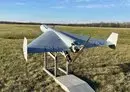
Among the most advanced systems emerging today is the Triton, an Autonomous Underwater and Surface Vehicle (AUSV) designed to operate above and below oceans.
The Triton is a separate technology from the MQ-4C Triton, an advanced high-altitude, long-endurance Unmanned Aerial Vehicle (UAV) designed for airborne surveillance missions.
The Triton is described by its manufacturer as the world's first and only AUSV, combining surface and underwater capabilities within one autonomous platform.
It can sail across the surface, submerge underwater, collect data from multiple environments and transmit information remotely from anywhere at any time.
Unlike traditional vessels or underwater vehicles that operate separately, Triton integrates both functions into one advanced autonomous system.
Powered by renewable energy sources, Triton is designed for long-duration missions without requiring constant human support.
The vehicle can autonomously sail for more than 30 days using wind and solar power, while underwater operations continue for more than five days.
This endurance allows organizations to monitor large ocean areas with fewer logistical challenges and reduced operational costs during extended missions.
Innovation in ocean intelligence
The innovation behind Triton represents a major shift in ocean intelligence, changing how maritime information can be collected and analyzed.
Traditional ocean monitoring often requires crewed ships, expensive equipment and complex deployments across challenging environments.
Autonomous systems like Triton provide persistent observation while reducing risks to human crews operating in remote or dangerous areas.
Triton's ability to carry different sensors makes the platform highly adaptable for various ocean-related operations.
It can support missions involving environmental monitoring, seabed mapping, weather observation, marine research and maritime surveillance.
These capabilities allow Triton to gather information from different environments while supporting a wide range of monitoring needs.
The platform's combination of autonomy, endurance and flexibility highlights the growing role of unmanned systems in future ocean operations.
A new era of autonomous maritime technology
Optional payloads can include advanced communications systems, cameras, acoustic sensors and other specialized technologies.
These features allow Triton to collect valuable information while supporting diverse monitoring and research requirements across ocean environments.
The future of ocean operations will increasingly depend on autonomous platforms that can gather more data and operate longer.
These systems can also reach areas that are difficult or dangerous for humans to access.
With its combination of surface mobility, underwater capability, renewable power and autonomous intelligence, the Triton represents a new generation of maritime technology.
It is built for a more connected and data-driven ocean where autonomous systems support improved understanding and monitoring.