![Vessels are seen anchored in the Strait of Hormuz, off the port city of Khasab on Oman’s northern Musandam Peninsula on May 17, 2026. [AFP]](/ssc_fa/images/2026/06/04/56303-hormuz-600_384.webp)
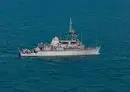
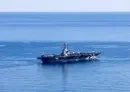
The European Union nations are now considering extending their Red Sea naval mission, Operation Aspides, to the strategic Strait of Hormuz.
The primary objective is to safeguard international shipping while curtailing the military influence of the Islamic Revolutionary Guard Corps (IRGC).
EU High Representative for Foreign Affairs and Security Policy Kaja Kallas announced the potential expansion on May 12, noting member states pledged additional vessels.
Analysts view this as Europe's recognition that serious maritime threats have now gravely extended beyond the Red Sea corridor.
"A final decision is pending due to high financial costs and heightened political and military risks," political analyst Mahmoud al-Taher told Al-Fassel.
Protecting this vital artery is crucial, as IRGC control could furnish an "existential" bargaining chip against global trade interests.
Experts concur that the cost of protecting the Strait is significantly lower than allowing global trade disruption and chaos.
The Strait of Hormuz is globally critical, accommodating 20 percent of global petroleum liquid consumption, and one-fifth of all global liquefied natural gas (LNG) trade.
Any serious threat to navigation in this choke point directly imposes immediate and negative repercussions on world energy markets.
The IRGC employs "asymmetric deterrence," using low-cost assets like drones and mines to force major powers to expend substantial resources.
"The Iranian regime aims to drive up the necessary operational costs for Western naval forces operating near its sensitive coastline areas," al-Taher said.
This aggressive strategy necessitates a firm international response to counter Iranian influence and swiftly restore confidence in international trade flow.