![A US service member surveys a tanker from an aircraft during a maritime patrol mission, reflecting increased US enforcement actions against sanctioned shipping routes. [US Marine Corps]](/ssc_fa/images/2026/05/30/56335-_143__vbss-600_384.webp)
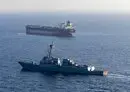
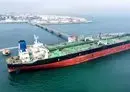
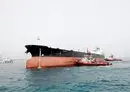
The United States seized the sanctioned oil tanker Skywave in the Indian Ocean, escalating pressure against Iran's maritime sanctions network.
US officials said the vessel previously transported Iranian crude through covert shipping channels designed to evade international enforcement measures.
According to ship-tracking data, the tanker traveled west of Malaysia after transiting the strategic Strait of Malacca earlier this week.
Industry analysts believe the vessel loaded more than 1 million barrels of crude from Iranian facilities in February.
The Treasury Department sanctioned Skywave during March for allegedly supporting Iranian petroleum exports through deceptive maritime transfer operations.
American officials described the seizure as another coordinated strike against Tehran's expanding shadow fleet operating across international shipping corridors.
Recent interdictions involving the tankers Majestic X and Tifani demonstrated Washington's willingness to pursue sanctioned vessels far beyond the Arabian Gulf.
Military planners believe repeated seizures expose significant vulnerabilities throughout Iran's oil transportation system, especially among aging blacklisted commercial tankers.
The operations also demonstrate extensive American intelligence monitoring capabilities, tracking sanctioned cargo movements across thousands of miles of international waters.
Iranian naval forces remain limited when protecting distant commercial tankers because coastal missile batteries cannot project power across the Indian Ocean.
Fast-attack craft operated by the Islamic Revolutionary Guard Corps (IRGC) Navy also lack practical reach near critical Asian maritime trade routes.
Security analysts warned that additional tanker interceptions could further disrupt Iranian oil revenues already constrained by longstanding American economic sanctions.
Washington has increasingly targeted maritime smuggling networks supporting Iranian exports, particularly vessels conducting suspicious ship-to-ship transfers near Southeast Asian waters.
Officials argued that aggressive maritime enforcement pressures Tehran financially while avoiding broader regional military escalation throughout already unstable Middle Eastern waterways.
The Skywave seizure signals continuing American determination to disrupt sanctions-evasion networks that support Iranian petroleum transportation and overseas commercial operations.
US commanders indicated additional enforcement actions remain possible against sanctioned vessels operating under fraudulent international registrations.
The expanding campaign warns commercial operators that facilitating Iranian oil shipments increasingly carries substantial financial and operational risks.