![A B-21 Raider stealth bomber glides through the skies during a flight test over a California desert. [US Air Force]](/ssc_fa/images/2026/07/22/57043-_188__b-21-600_384.webp)
The Islamic Republic’s military leadership frequently claims that it maintains hidden capabilities to withstand a prolonged conflict.
Hardline figures, including Islamic Revolutionary Guard Corps (IRGC) Commander Ahmad Vahidi, rely on a dangerous assumption about modern warfare.
The regime’s strategy hinges on the belief that the United States would have to authorize a highly controversial nuclear strike to halt its deeply buried infrastructure.
The Islamic Republic built its most critical strategic assets deep underground to withstand conventional air forces.
These heavily fortified sites include the Fordow uranium enrichment facility and the massive subterranean missile cities.
The regime's commanders assumed these critical sites were physically unreachable without crossing the nuclear threshold.
Its decision makers believed their passive defense doctrine would indefinitely protect these deep defensive structures.
Multi-targeting via the B-21 Raider
For many years, the Islamic Republic could calculate its risk based on a major bottleneck in American logistics and heavy ordnance.
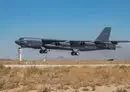
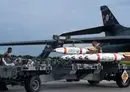
The massive 30,000-pound GBU-57 bomb could only be carried by the B-2 Spirit stealth bomber fleet, which only holds two per aircraft.
However, when the GBU-76 is successfully miniaturized to 22,000 pounds, it can be integrated into the upcoming B-21 Raider stealth bomber fleet.
The B-21 will likely carry multiple penetrator rounds per sortie, enabling simultaneous strikes against several deeply buried targets during a single mission.
This dramatic advancement allows a smaller fleet of American stealth bombers to completely dismantle an entire network of underground bunkers simultaneously.
Instead of striking just one or two targets per run, the B-21 can hit numerous locations in a single mission.
The GBU-76 therefore provides the Pentagon with a highly viable conventional alternative to nuclear bunker busters.
This crucial technological shift drastically lowers the political barrier for the US to authorize strikes on ultra-deep enemy facilities.
Decision makers would not need to cross the taboo threshold of utilizing a tactical nuclear weapon to achieve total structural destruction.
As a result, the official designation of the GBU-76 Next Generation Penetrator poses a direct threat to the Islamic Republic’s entire defensive architecture.
Understanding the shift from specialized heavy bombers to versatile multi-role platforms provides significant insight into the changing landscape of international security and conventional deterrence strategies.