![US Marines and Sailors familiarize themselves with the Army’s Typhon missile system during a training session at Marine Corps Air Station Iwakuni, Japan, on September 12, 2025. [US Army]](/ssc_fa/images/2026/07/03/56775-typhon_-600_384.webp)
The US Army's Mid-Range Capability (MRC) system, commonly referred to as "Typhon," represents a pivotal shift in the service’s long-range precision fires modernization strategy.
As part of the Army’s modernization portfolio, the system fills a critical range gap between the Precision Strike Missile and the long-range Strategic Fires Missile.
It provides versatile, land-based power, capable of neutralizing complex and highly sophisticated regional security threats.
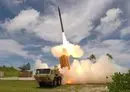
At its core, the Typhon system is a mobile, ground-based missile launcher designed to fire two primary US Navy munitions.
These two are the Standard Missile-6 (SM-6) and the Tomahawk cruise missile, the latter of which has a range of 2,400km.
By leveraging existing, proven naval weaponry, the Army achieved rapid development and fielding, integrating these sea-based missiles into a land-based format.
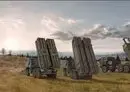
The system is housed in a containerized launcher mounted on a trailer, which can be towed by a standard heavy tactical truck.
This design prioritizes mobility and survivability, allowing the Army to quickly deploy units, establish a firing position, and relocate to avoid detection.
Developmental history, strategic importance
The development of the Typhon system was accelerated in response to the expiration of the Intermediate-Range Nuclear Forces (INF) Treaty, on August 2, 2019.
As the military reevaluated its land-based deterrence posture, there was an urgent need to field a system capable of operating within contested environments.
Typhon became the answer to this challenge, providing combatant commanders with a cost-effective solution that leverages established supply chains and logistics.
It gives the Army a flexible, mobile platform to execute deep strikes and maritime interdiction without solely relying on the Navy or Air Force.
Its ability to switch between surface-to-air, surface-to-surface, and anti-ship roles makes it a multi-domain asset, crucial for modern operational environments where flexibility is paramount.
The system also strengthens the Army’s argument that it deserves a central role in future conflicts.
Relevance in modern exercises
Deploying the Typhon missile system to Japan through July 1 marks a strategic effort in countering regional military assertiveness through collaborative defense exercises.
This land-based system strengthens allied capabilities during joint drills, enhancing the defense posture against evolving security challenges across the Pacific region.
Utilizing the mobile Typhon system validates the military's ability to project power and maintain effective deterrence within complex and critical theaters.
These exercises prove the Typhon system is a deployable asset that integrates with allied command to provide a persistent, mobile, and lethal regional deterrent.