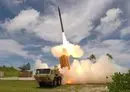
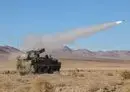
![A NASAMS launcher fires an interceptor missile during a live-fire exercise, illustrating the system's role in modern short-to-medium range air defense operations. [Royal Norwegian Navy]](/ssc_fa/images/2026/07/08/56885-_173__nasams-600_384.webp)
The National Advanced Surface-to-Air Missile System (NASAMS) provides short-to-medium range ground-based air defense against diverse airborne threats.
The system combines advanced sensors, networked command capabilities and proven missile technology.
Its three major versions demonstrate continuous innovation responding to increasingly complex air threats while preserving flexibility, scalability and interoperability across allied defense networks.
Origins and evolution
During the Cold War and after, US and Norway sought a modern replacement for aging air defense systems, including the Nike Hercules and Improved HAWK.
Engineers emphasized a distributed architecture instead of relying upon single radar sites or centralized fire-control arrangements.
NASAMS entered operational service with the Royal Norwegian Air Force during 1998, establishing a new approach to networked ground-based air defense.
The original system integrated the AN/MPQ-64 Sentinel radar with the AIM-120 AMRAAM in a surface-launched configuration.
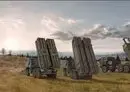
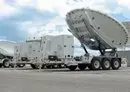
A centralized Fire Distribution Center connected launchers, sensors and operators through secure digital communications, improving survivability through dispersed deployments.
This architecture allowed individual components to remain geographically separated while functioning together as one coordinated defensive network.
Although highly capable, the baseline configuration supported fewer sensor options and communications pathways than later generations eventually introduced.
NASAMS II expanded system performance through improved command-and-control software, greater processing capacity and enhanced integration with Link 16 tactical data networks.
Operators gained broader situational awareness by incorporating additional radar types and electro-optical sensors into the defensive architecture.
Greater interoperability enabled seamless coordination with allied air defense assets, strengthening multinational operations without requiring identical equipment across participating forces.
The upgraded design also attracted additional international operators, including the Netherlands, Spain and Finland, demonstrating confidence in its scalable architecture.
Modern capabilities and continuing innovation
NASAMS III represents the most flexible evolution, emphasizing open architecture, expanded sensor compatibility and broader interceptor integration across multiple mission requirements.
The system supports additional interceptor options beyond AIM-120 AMRAAM, including the AIM-9X Sidewinder and AMRAAM-ER, increasing engagement flexibility.
Modern command software processes information from multiple sensors simultaneously, enabling faster engagement decisions while improving resilience against electronic warfare challenges.
Modular construction allows operators to tailor launchers, radars and communications equipment according to operational requirements without redesigning the entire system.
Continuous software upgrades also improve adaptability against evolving threats, including small unmanned aircraft and increasingly sophisticated high-speed weapons.
Across three generations, NASAMS demonstrates how modular engineering, networked command systems and interceptor flexibility remain central to effective modern ground-based air defense.