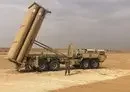
![US Army THAAD interceptor streaks skyward from its mobile launcher during a defense system capability test flight. [Missile Defense Agency]](/ssc_fa/images/2026/07/01/56766-_166__thaad-600_384.webp)
The United States military relies on the Terminal High Altitude Area Defense (THAAD) system for advanced regional ballistic missile protection.
This rapidly deployable, ground-based defensive shield neutralizes short-, medium- and intermediate-range threats both inside and outside the atmosphere during their final diving phase of flight.
As missile technologies grew increasingly sophisticated, Washington rapidly prioritized this mobile platform to bridge critical gaps in its expanding multi-layered continental and overseas defense architecture.
The evolution of kinetic missile defense
The US Army began developing the THAAD system in 1992 to counter the dangerous tactical ballistic missile attacks experienced during previous engagements.
Early flight tests presented massive challenges with numerous frustrating failures, prompting engineers to completely redesign the complex system requirements.
Following successful redesigns, the program established a remarkable string of test intercepts and transitioned into a vital US Congressional priority.
It became incredibly important because it provides a crucial, upper-tier defensive layer to protect vulnerable citizens, strategic industrial resources and deployed military forces globally.
Modern military capabilities rely on hit-to-kill technology that obliterates incoming targets through sheer kinetic force rather than relying on explosive warheads.
This precise kinetic impact successfully neutralizes chemical and nuclear threats while eliminating the risk of devastating conventional secondary explosions.
Precision radar tracking capabilities
The AN/TPY-2 X-band radar provides the THAAD system with critical tracking capabilities and operates in two distinct, adaptable configurations.
It functions in a terminal mode for fire control at ranges up to 1,000 kilometers, or a forward-based mode that extends detection to 3,000 kilometers.
Each truck-mounted battery utilizes this extremely powerful radar system to scan the skies and detect, track and intercept fast-moving ballistic threats.
The system integrates advanced targeting technology, including the BAE Systems infrared seeker, which continuously guides the interceptor directly into the path of the incoming weapon.
This advanced infrared sensor technology processes complex imagery to lock onto hostile missiles traveling at extraordinary speeds before they can ever reach the ground.
Department of War has continuously invested in expanding this vital industrial production capability, rapidly manufacturing enough interceptors for both the US Army and allied partners.
By delivering comprehensive upper-atmosphere protection, this defensive pillar successfully deters foreign aggression and ensures that combatant commanders have reliable strategic options during severe international crises.