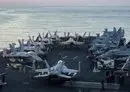
![An F/A-18F Super Hornet prepares for launch from the flight deck of the Nimitz-class aircraft carrier USS Abraham Lincoln (CVN 72) during Operation Epic Fury on March 30. [US Navy]](/ssc_fa/images/2026/04/24/55661-9592378-600_384.webp)
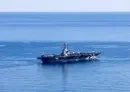
Operation Epic Fury marked the most consequential naval campaign ever conducted against Iran’s Islamic Revolutionary Guard Corps Navy, targeting core maritime capabilities.
Launched on February 28, Iranian naval assets were designated top priority targets from the very first hours of the operation.
The scale of destruction was swift, coordinated, and overwhelming across multiple domains, striking critical components of Iran’s maritime military infrastructure.
Within days, US Secretary of War Pete Hegseth declared the Iranian navy "combat ineffective," underscoring the scale and speed of operational success.
The Iranian Navy now lies mostly at the bottom of the Arabian Gulf, Chairman of the Joint Chiefs Air Force Gen. Dan Caine told reporters at the Pentagon on April 8.
"We have destroyed Iran's defense industrial base, their ability to reconstitute those capabilities for years to come," he said.
Among the most significant losses was the IRIS Dena, one of Iran’s most capable surface combatants within its regular navy fleet.
The Moudge-class frigate, equipped with anti-ship missiles, advanced radar systems, and helicopter support capabilities, was sunk by a US Navy submarine.
The commander of US Central Command, Admiral Brad Cooper, confirmed on March 16 that more than 100 Iranian naval vessels were destroyed.
This included at least 16 mine-laying vessels that posed a direct threat to commercial shipping through the Strait of Hormuz.
The IRGC Navy, once feared for its asymmetric swarm tactics, was reduced to a fraction of its previous operational capacity.