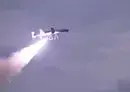
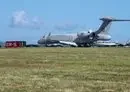
![The 184th Attack Squadron hosted the 147th Attack Wing for an Agile Combat Employment (ACE) exercise at Ebbing Air National Guard Base, Arkansas. The exercise marked the first MQ-9 landing at Fort Smith Regional Airport via a KU-band satellite link using Automatic Takeoff and Landing Capability (ATLC), demonstrating increased flexibility, reduced manpower requirements and enhanced readiness in contested environments. [Air National Guard]](/ssc_fa/images/2026/06/17/56601-mq-600_384.webp)
In a campaign shaped by speed, precision and constant surveillance, one aircraft quietly dominated the fight.
The MQ-9 Reaper emerged as the most valuable player of Operation Epic Fury, redefining modern airpower doctrine.
Senior US Air Force leaders told Congress that no other platform came close to matching the Air Force's operational impact.
For policymakers and military planners, the message is clear: persistence, not just firepower, now determines battlefield success.
Unmatched persistence and battlefield awareness
At the core of the Reaper's advantage is endurance that exceeds 24 to 30 hours per mission.
This extended loiter time enables continuous monitoring of missile corridors and naval movements across vast operational areas.
According to recent reports from Air and Space Forces Magazine, this persistence allowed US Central Command (CENTCOM) to maintain uninterrupted intelligence coverage.
Crewed fighters, constrained by fuel and pilot fatigue, cannot replicate this level of sustained presence.
The result is a constantly updated battlefield picture that reduces uncertainty and accelerates decision-making.
A complete kill chain in a single platform
The Reaper is among the few platforms capable of executing a full find, fix and strike cycle independently.
Equipped with electro-optical sensors, radar and signals intelligence systems, it can identify and engage mobile missile launchers in real time.
This single-aircraft kill chain eliminates delays caused by coordinating multiple platforms.
Defense News reported that this capability proved decisive against time-sensitive targets that would otherwise evade detection.
For officials evaluating future force structures, this integration represents a major operational advantage.
High strike volume with reduced human risk
During operations against the Islamic Republic regime, the Reaper delivered a higher volume of strikes than many crewed aircraft.
It effectively assumed missions traditionally assigned to fighter jets while operating in heavily defended airspace.
Despite losses to advanced air defenses, analysts assess the attrition as strategically acceptable.
Each unmanned aircraft lost meant no pilot placed at risk over the Islamic Republic's hostile territory.
The platform that can stay longest, see most clearly and strike fastest will shape the outcome.