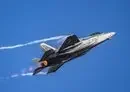
![F-16 Fighting Falcons are pictured at the Dubai Airshow. The United Arab Emirates (UAE) Air Force operates a fleet of approximately 80 F-16 Fighting Falcon aircraft. [Karim Sahib/AFP]](/ssc_fa/images/2026/04/10/55491-afp-600_384.webp)
The US State Department announced foreign military sales valued at $16.5 billion to Jordan, the United Arab Emirates and Kuwait.
These sales include advanced air defense assets and sophisticated radar systems designed to address emerging threats and shifting military dynamics in the region.
Increased missile and drone attacks are reshaping Middle Eastern security, prompting Arab leaders to recalibrate their strategies.
Upgrading defenses
Jordan, the UAE and Kuwait will receive significant military upgrades as part of the newly approved defense packages.
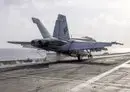
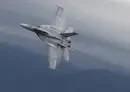
Among several upgrades, the UAE will receive advanced medium-range air-to-air missiles and F-16 munitions.
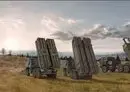
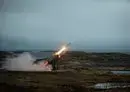
Kuwait will enhance its air and missile defenses with new sensor radars, while Jordan will gain vital aircraft repair services and ordnance support.
The emergency approval and substantial cost have not gone unnoticed by the Islamic regime in Tehran.
The upgraded radar systems will specifically address threats created by recent attacks on early warning sites throughout the region.
US government approval of the arms sales to Arab partners signals a powerful message of unity against the Islamic regime's aggression.
This move underscores the deep trust these allies place in American military technology for their defense.
By bolstering the defensive capabilities of key partners, these sales are crucial for reinforcing regional stability and strengthening strategic alliances.